


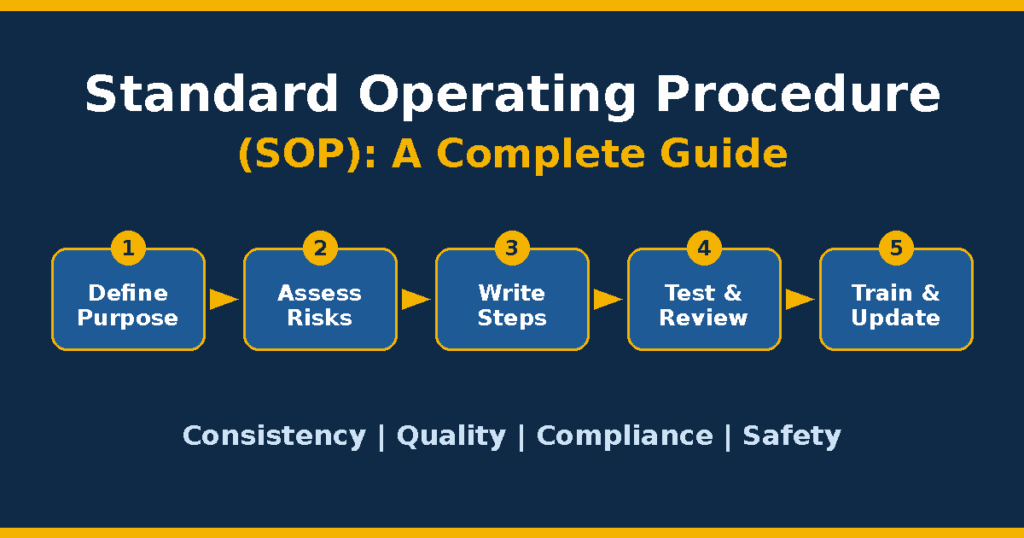
Every well-run organization depends on tasks being done the same way, every time. A standard operating procedure (SOP) makes that possible. It works like a shared playbook that keeps quality high, mistakes low, and teams aligned. This guide covers what an SOP is, why it matters, what it contains, and how to write one that people will use.
What Is a Standard Operating Procedure?
A standard operating procedure is a documented set of step-by-step instructions for carrying out a routine task. Organizations create SOPs so employees perform the same operation consistently, whoever is doing it. The goals are efficiency, uniform quality, fewer miscommunications, and compliance with industry regulations.
The term varies by field. Some military services say “standing operating procedure,” because a unit’s procedure is often specific to that unit rather than universal. In clinical research, SOPs are described as detailed written instructions that achieve uniformity in a specific function. In workplace safety, they are sometimes called safe work method statements.
Why SOPs Matter
Well-written SOPs help in several ways:
- Consistency: Everyone follows the same process, so results don’t depend on who happens to do the job.
- Fewer errors: Clear steps leave less room for guesswork and costly mistakes.
- Faster training: New hires can learn from the document instead of interrupting supervisors with basic questions.
- Better communication: Detailed steps reduce ambiguity, and updates can be sent to everyone at once.
- Regulatory compliance: SOPs show how the organization meets required standards. Quality frameworks such as ISO 9001 expect processes that affect product quality to be documented.
- Audit evidence: Written procedures give auditors proof that processes exist and are followed.
- Safer workplaces: Hazards are identified up front and controls are built into routine tasks.
Key Components of an SOP
Formats differ, but most SOPs include:
- Title page: the procedure name, SOP ID, intended audience, and the people who prepared and approved it.
- Table of contents: quick navigation for longer documents.
- Glossary: definitions of terms readers may not know.
- Step-by-step instructions: the core of the document, covering the purpose, roles, responsibilities, decisions to be made, and what to do if something fails.
- Appendices: forms, checklists, or reference material that support the procedure.
How to Write an SOP Step by Step
1. Define the purpose. Decide what the task achieves and why it needs documenting.
2. Assess the risks. Look at each step for potential obstacles and single points of failure before you write anything.
3. Choose a format. A numbered list suits short, simple tasks. Hierarchical steps handle complex procedures with sub-steps. A flowchart works best when outcomes vary.
4. Identify dependencies and audience. Note any other procedures the task relies on. Write for the actual reader, because an SOP for veterans should look different from one for beginners.
5. Write clearly. Use active voice, present tense, and short sentences. Explain how to do each step, and state what the user should expect to see afterward. Add a troubleshooting section for steps that can go wrong.
6. Test and gather feedback. Have the people who will use the SOP try it and point out gaps. Revise until they can follow it without confusion.
7. Approve and publish. Store it somewhere secure and easy to find, such as a cloud knowledge base.
8. Train and review. Train employees on the procedure, and revisit each SOP every six to twelve months, tracking changes through version control.
SOP Best Practices
- Use one consistent template and style across the organization.
- Keep language plain and free of jargon.
- Keep all SOPs in a single searchable location.
- Put troubleshooting guidance where users will notice it.
- Make sure the writing suits the reader’s literacy level, since procedures people can’t easily read won’t be followed.
- Retire outdated SOPs, and archive them only when there is a reason to.
- Have supervisors check that procedures are actually being used.
Where SOPs Are Used
SOPs appear in almost every sector:
- Manufacturing: production line steps and quality checks.
- Healthcare: patient data handling, billing, and clinical workflows.
- Finance: billing, collections, and customer verification.
- Food industry: hygiene, handling, and hazardous materials.
- IT and cybersecurity: backups, patching, security scans, and incident response.
- Customer service: complaint handling and response times.
- Government and education: regulatory processes and institutional workflows.
- Aviation: standardized cockpit and operational procedures that support safety.
Common Challenges
SOPs are powerful but not foolproof. They go out of date without regular review, and they can feel rigid when a situation calls for judgment or creativity. Employees may ignore them if they are hard to understand or poorly enforced. Writing a document that is complete yet readable is also harder than it sounds. Strong management support, regular reviews, and a feedback loop from the people doing the work solve most of these problems.
Frequently Asked Questions
What is the difference between a policy and an SOP?
A policy states what the organization requires and why. An SOP explains how to carry it out.
How often should an SOP be updated?
Every six to twelve months, or sooner when the process, tools, or regulations change.
Who should write an SOP?
Ideally someone who knows the task well, with input from the employees who will use it.
Conclusion
A standard operating procedure turns knowledge that lives in people’s heads into a reliable, shareable process. When SOPs are clear, tested, and kept up to date, they reduce errors, speed up onboarding, support compliance, and help any organization scale with confidence. Start with your most critical routine tasks, document them simply, and improve the documents as your team grows.