
Most people don’t quit blogging because they run out of ideas. They quit because the setup wore them down. Too many settings, a theme that fights every change, a dashboard that feels like an airplane cockpit. If you’ve ever opened a new platform, stared at it for twenty minutes and closed the tab, you know the feeling.
So before you write a single post, it’s worth spending an hour on the platform decision. It’s boring, but it saves months later.
Start with what you actually want to do
A food blogger posting twice a week has different needs from someone building a niche site with hundreds of articles. Ask yourself three plain questions. How often will I publish? Do I want to make money from this, now or later? How comfortable am I with technical stuff?
If your honest answers are “weekly,” “maybe someday” and “not very,” you’ll want something simple. If you plan to run ads, sell products or add custom features, you’ll need more flexibility, even if it costs you a steeper learning curve.
The five things that really matter
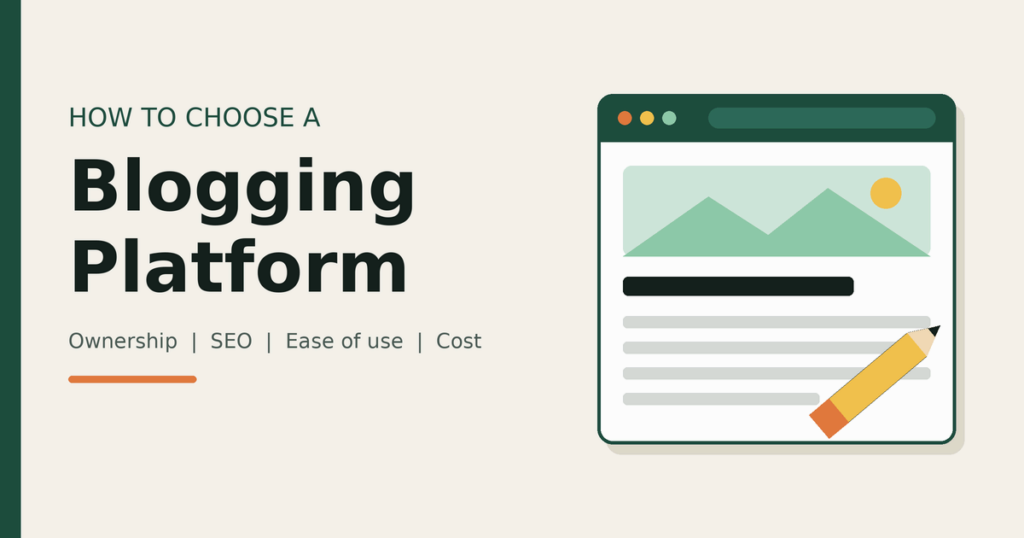
1. Ownership of your content. Check whether you can export your posts and move them elsewhere. A platform that locks your content in is a risk, no matter how nice it looks today. Look for export options (XML, Markdown or similar) before you commit.
2. Basic SEO controls. You don’t need an advanced toolkit. You do need editable titles, meta descriptions, clean URLs, image alt text and a sitemap. Google’s own SEO starter guide lists the fundamentals, and any platform you pick should let you do them without hacks.
3. Writing experience. This one gets ignored. You’ll spend most of your time in the editor, so try it. Does it feel quick? Can you format headings, add images and embed links without friction? A clunky editor quietly kills publishing habits.
4. Speed and mobile performance. Most readers arrive on a phone. A slow, bloated page loses them before the first paragraph. Test a few demo blogs on the platform and see how they load on a normal mobile connection.
5. Real cost. “Free” often means limits on storage, branding or monetization. Paid plans can be great value, but add up the full year, including domain, hosting and any extensions.
A quick look at the main options
Self-hosted WordPress. Still the most flexible choice. With WordPress.org you control everything, from design to plugins to monetization. The trade-off is maintenance: updates, security, backups and hosting are on you. It’s a good fit if you’re comfortable learning as you go. We’ve covered a lot of practical WordPress tasks here on Vofeg if you want to see what that looks like day to day.
Hosted website builders. Wix, Squarespace and similar tools are easy to start with and look polished. They’re better for portfolios and small business sites than for content-heavy blogs, and moving a large archive out later can be painful.
Newer, writing-focused platforms. This is where things have gotten interesting. A number of lighter platforms now focus on one job: letting you write and publish without wrestling with design or plugins. Simpcit6 is one of these. If you want a straightforward place to publish and don’t need a heavy toolset, it’s worth a look, and a quick test post will tell you more than any review.
Newsletter-first tools. Substack and Ghost lean toward email audiences. Great if your main goal is subscribers, less ideal if search traffic is your priority.
A simple way to decide
Don’t try to find the perfect platform. Pick two that seem right and publish the same short post on both. Notice which one made you want to keep going. Check how the post looks on your phone, whether the URL and title are easy to edit, and whether you can export the content. Ten minutes of this beats an afternoon of comparison articles.
Common mistakes to avoid
Picking a platform because a friend swears by it, without checking that it matches your goals. Spending weeks on design before writing anything. Ignoring the export question until you want to leave. And switching platforms every few months, which hurts both your momentum and your search visibility.
The bottom line
The best blogging platform is the one you’ll still be using in a year. Choose for ownership, solid SEO basics, a comfortable editor and a price you can live with. Then stop researching and start writing. Your first ten posts will teach you more than any comparison chart.