You have probably seen it happen. You type a topic into a keyword tool, it shows “0” or “<10” searches a month, and you close the tab. But then you notice that some small blogs get steady visits from the Google app on phones, with no obvious keyword behind them. That feed is Google Discover, and it plays by different rules from regular search.
So can a topic that keyword tools label as zero volume actually bring you Discover traffic? The honest answer is yes, it can, but not in the way most people expect. This guide explains how Discover really works, where zero search volume topics fit in, and what you can do to give your posts a fair chance.
What Is Google Discover (and How Is It Different From Search)?
Google Search is reactive. Someone types a question, and Google shows results. Google Discover is proactive. It shows a personalized feed of articles, videos and stories to people based on their interests, without them typing anything.
That difference matters for everything that follows. According to Google’s own Discover documentation, content is shown based on what people are likely to find interesting, and there is no guaranteed way to get listed. Your page needs to be indexed and follow Google’s content guidelines, and after that it is up to the feed.
Why Search Volume Does Not Decide Discover Traffic
Search volume is a count of how many times people type a phrase into Google each month. Discover has no typed phrase. Nobody searches their way into the feed, so a keyword tool has nothing to measure.
This is why a “zero volume” label tells you very little about Discover. It does not mean your topic will fail there, and it does not mean it will succeed either. Discover cares about a different set of signals: whether people interested in a subject tend to engage with content like yours, whether your site is a trusted source on that subject, and whether the page offers a good experience.
It also helps to remember that “zero” is often not really zero. Keyword tools work from estimates and samples, so very specific questions get reported as 0 to 10 searches even when real people are asking them. If you want a deeper look at that side of the story, this piece on why you should target zero search volume keywords explains how these low-competition phrases build topical authority and bring in highly specific readers.
So, Can Zero Search Volume Topics Get Discover Traffic?
Yes, with three conditions.
1. The topic must have an interested audience. Many zero volume topics are simply niche. A post about a specific hostel hack, a small software workflow or a regional exam pattern may never show up in keyword tools, yet a group of people care about it. Discover can match your page to that group if they have shown interest in related subjects.
2. Your site should be known for that subject. Google has talked about topic authority in connection with Discover. A site that publishes several solid posts on one theme is easier to understand and trust than a site with a single random article. This is where niche, zero volume topics are actually an advantage: you can cover a narrow area deeply instead of competing with giants on a broad one.
3. The content must meet Discover’s quality bar. That brings us to the latest guideline changes.
What Google Changed in 2026
In early February 2026, Google ran a Discover core update, the first core update aimed only at the Discover feed and not at general Search. Around the same time it revised its “Get on Discover” guidance. As Search Engine Journal reported, the updated documentation added a page experience recommendation, now names clickbait and sensationalism directly, and splits its title advice into two separate points.
In plain terms:
- Headlines should describe the content honestly, not tease or exaggerate.
- Posts that play on outrage, shock or curiosity gaps are riskier than before.
- The page itself should be pleasant to read, especially on a phone.
This suits zero volume content well. Posts built to answer a narrow question properly tend to have straightforward titles, so you are less tempted to use clickbait.
How to Give a Zero Search Volume Post a Real Chance on Discover
No one can promise Discover traffic, but these steps raise your odds.
1. Build a small cluster, not a single post
Pick one theme and publish three to five connected posts on it. If your theme is blogging and SEO, for example, a reader who finds one article should be able to move naturally to the next. On Vofeg, a post like this one can sit beside Image SEO for Bloggers and Why Websites Remain Key in the AI Search Era, which together show Google a consistent focus.
2. Write a clear, honest headline
Use a title that tells people exactly what they will get. “Can Zero Search Volume Topics Get You Traffic From Google Discover?” works because it asks a real question and the article answers it. Avoid phrases like “you will never believe” or “the shocking truth,” which the 2026 guidance specifically warns against.
3. Use large, original, high-quality images
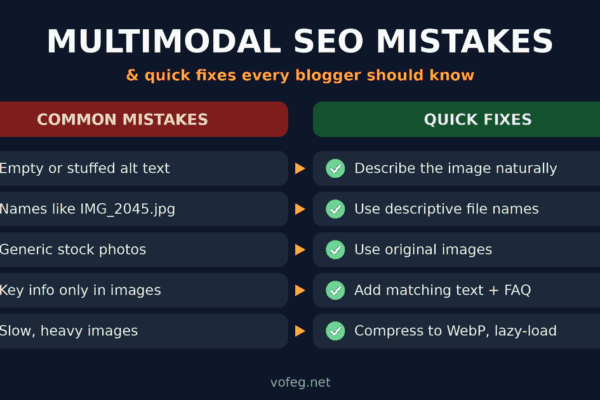
Discover is a visual feed, and posts with strong images tend to stand out. Google recommends large images, and many SEO plugins let you enable the setting that allows large image previews in Google. Use your own graphics or photos where you can, add descriptive file names and alt text, and avoid tiny or blurry thumbnails. Our guide to optimizing images to rank in Google Search covers the practical steps, and common multimodal SEO mistakes shows what to avoid.
4. Make the page easy to read on mobile
Because page experience is now part of the guidance, check that your post loads fast, text is readable without zooming, and ads or pop-ups do not cover the content. Short paragraphs, clear subheadings and a clean layout help both readers and Google.
5. Help Google understand the page
Structured data does not guarantee anything in Discover, but it helps search engines understand who wrote the page and what it is about. If you are on WordPress and prefer not to add another plugin, follow this tutorial on adding schema markup in WordPress without a plugin.
6. Connect your evergreen topic to something current
Discover favors content that matches what people are interested in right now. You do not need to chase trends, but you can tie a lasting topic to something timely. A post on zero volume topics, for example, gains relevance when it is linked to recent Google updates and the rise of AI-driven search.
7. Share it where people already spend time
Discover traffic cannot be forced, but early engagement from other channels can bring readers to your page. Pinterest is a useful example, and our walkthrough on getting free traffic to your blog from Pinterest shows how to do it step by step.
How to Check Whether Discover Is Sending You Traffic
Open Google Search Console and look for the Discover report under Performance. It appears only when your site has had enough Discover impressions, so do not worry if you do not see it right away. When it does appear, check which pages get impressions, how many clicks they earn, and whether the numbers rise and fall sharply.
Search Console is also the best tool for zero volume topics in general. Instead of relying on a keyword tool’s estimate, look at the real impressions and queries your posts receive. You will often find dozens of small variations bringing in visitors that no tool predicted.
Common Mistakes to Avoid
- Writing clickbait. It goes against Google’s current guidance and can hurt trust with readers.
- Publishing thin posts. A 300-word answer to a niche question will not impress Discover or Search.
- Chasing outrage or gossip. Sensational topics may spike for a day, but they are exactly what the guidelines discourage.
- Treating Discover as a plan. Discover traffic is known to be unpredictable. A post can get thousands of visits one week and almost none the next.
- Ignoring regular Search. Zero volume keywords still work well in Search, and that traffic is steadier.
A Realistic Way to Think About It
Think of Discover as a bonus, not a foundation. Zero search volume topics give you low competition, loyal niche readers and a chance to build topical authority. If a post also happens to match what people are interested in, has a strong image, and loads well on mobile, Discover may pick it up. If it does not, you still have a useful page that can rank in Search, show up in People Also Ask boxes, and support your other articles through internal links.
That combination is what makes this approach reliable, especially when Google’s updates keep rewarding original, helpful and well-organized content.
Frequently Asked Questions
Do I need keywords to appear on Google Discover?
Not in the way you do for Search. Discover has no typed query, so keywords matter mainly because they help Google understand what your page is about. Clear topic coverage matters more than keyword volume.
Can a new website appear on Google Discover?
It is possible, but newer sites usually have less topic authority. Focus on one subject, publish consistently and build quality before expecting Discover traffic.
Is Google Discover traffic reliable?
No. It can be very strong for a few days and then disappear, because the feed depends on changing interests. Treat it as extra traffic on top of Search.
Are zero search volume keywords worth targeting in 2026?
Yes, especially for new and growing blogs. They face less competition, attract specific readers and help you cover a topic in depth. Measure results with Search Console rather than keyword tool estimates.
Does using AI tools to write posts hurt my chances?
Google’s concern is low-quality, mass-produced content, not the tool itself. Whatever you use, add your own experience, check the facts and make sure each post answers a real question better than what already exists.
Final Thoughts
Zero search volume topics can bring Google Discover traffic, but only indirectly. Discover does not read keyword data. It looks for helpful, honest, well-presented content from sites that clearly know their subject. Choose niche topics your readers truly care about, build a connected set of posts around them, use strong images and a clean mobile layout, and let the results show up in Search Console.
If you want to keep building your topical authority, explore more guides in our SEO category.